Some spaces simply feel right the moment you walk into them. The layout makes sense. The lighting feels intentional. The furniture, artwork, and decor work together. These environments do not happen by accident. They are the result of thoughtful choices made by the people who designed them.
Curation is often talked about in the context of professional interior designers or glossy magazine spreads. But in practice, curation is everywhere. Restaurant owners make deliberate decisions about chairs and table settings. Airbnb hosts select art and furnishings that create a sense of comfort. Boutique hotel managers refine everything from rugs to lighting to bathroom products to create a cohesive experience.
These choices matter. They shape how it feels to be in a space, and often, they shape what people come to appreciate and eventually purchase.
Every Curated Space Influences Behavior
Even when we do not consciously register it, the design of a space influences how we respond to the objects within it.
A well-chosen sofa in a vacation rental is not just seen, it is used. A set of dining chairs in a restaurant is experienced over a meal. A lamp in a boutique hotel room is not just decor, it becomes part of the evening routine.
This everyday interaction gives people a clearer understanding of a product than any showroom or website can. It highlights comfort, functionality, durability, and atmosphere in real-life conditions. That experience can meaningfully shape purchase decisions.
In that sense, the people who curate these spaces create genuine commercial value. Their choices introduce products to consumers in a way that feels practical and intuitive.
Curation Already Has a Recognized Value, Just Not Everywhere
In many industries, the value of curation is well established. Interior designers, stylists, and consultants are compensated for selecting products and shaping environments. Retailers invest heavily in visual merchandising and layout design.
But outside of those formal roles, there are thousands of individuals making similarly thoughtful decisions every day: small business owners, boutique hoteliers, hosts, restaurateurs. They invest money and time into crafting environments that feel authentic and inviting, yet the impact of those decisions often goes unrecognized.
Despite influencing the way people discover and experience products, these curators have rarely had a way to participate in the value they help generate.
Curadeco Expands the Definition of Who Can Benefit From Curation
Curadeco is built around a simple idea. If a space helps a consumer discover and appreciate a product, the people behind that space should share in the value created.
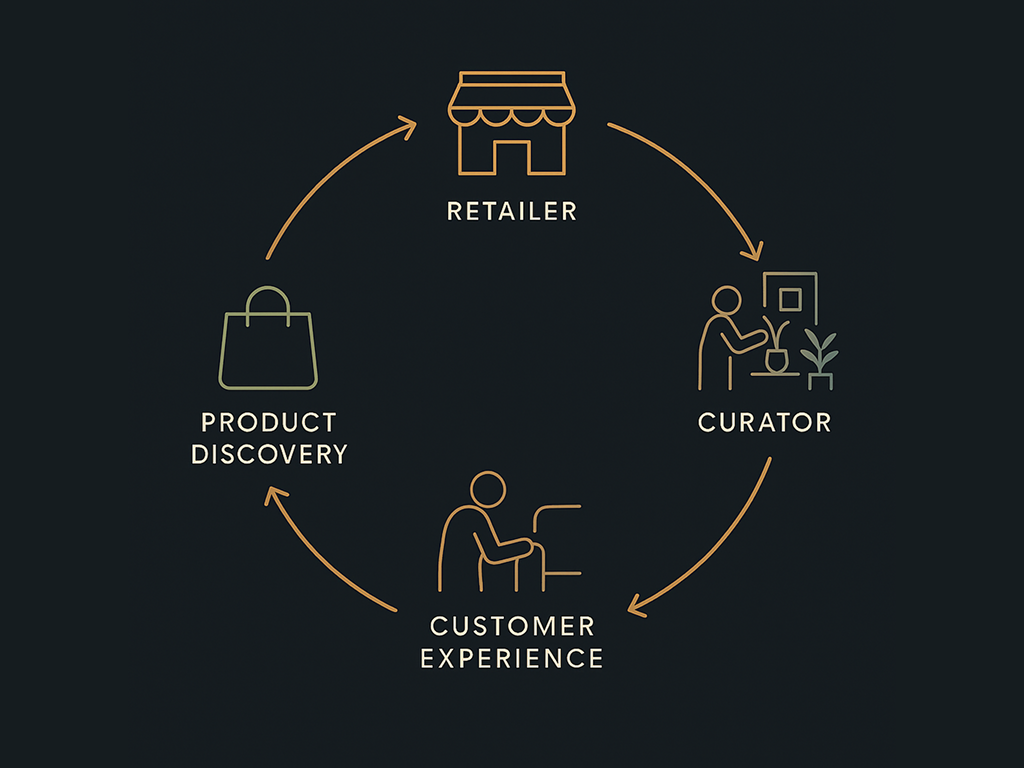
The platform enables curators, whether they run a hotel, restaurant, cafe, or vacation rental, to earn from the products featured in their spaces. By creating a virtual storefront and placing QR codes throughout the environment, curators can give guests direct access to the furniture, art, decor, carpets, tableware, or home essentials they are using and enjoying.
This does two things:
- It recognizes the curator as part of the product discovery process. Their choices influence interest and understanding, and the platform gives structure to that role.
- It gives brands a new, authentic form of distribution. Instead of relying solely on showrooms or digital advertising, companies can extend reach through real spaces where people naturally interact with their products.
The result is a more complete value chain that reflects how product discovery actually happens in the physical world.
A Customer Who Is Also a Partner
Curadeco creates a unique relationship between brands and curators. Curators are not influencers in the traditional sense; they're customers using products for their intended purpose. Their endorsement is based on function, fit, and experience—not sponsorship.
This gives brands something particularly meaningful: a distribution channel rooted in genuine use rather than advertising.
For curators, it creates an additional revenue stream tied to decisions they already make about furniture, artwork, decor, and home essentials that shape the character of their space.
A Practical, Mutual Benefit
The model logic is straightforward:
- Curators arrange spaces with intention.
- Guests naturally interact with the products in those spaces.
- That interaction helps people understand and appreciate the products more deeply.
- If they choose to purchase, both the curator and the brand benefit.
It creates a sustainable, mutually aligned ecosystem where:
- Curators are recognized for their contribution.
- Brands extend their reach through authentic environments.
- Consumers discover products through real experiences.
Recognizing What Already Exists
Curation has always influenced how people experience products. The difference now is that it can be acknowledged and valued more directly.
By making curated spaces part of the retail journey, Curadeco gives structure to something that has long existed informally. It elevates practical design decisions into a meaningful part of how products are discovered, not by inflating their importance but by recognizing their real-world impact.
As the line between experience and commerce continues to blur, the spaces where people spend their time and the people who shape them will play an increasingly important role in how products find their way into the world.
Curadeco helps make that role clearer, fairer, and more connected.
Ready to monetize your space?
Join venues already earning from the products guests love.
Request Access